THE SAGA OF 'NANABREAD'
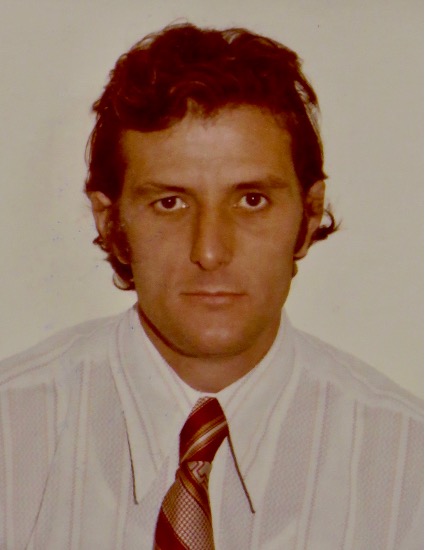
I first encountered Robinson in 1967 while on beach patrol. He was concealed in bushes above the Warwick beaches, watching the bathers below, and reacted badly when my partner, Mike Jent, and I moved him on. By then he was already known to police and was suspected of prowling and opportunistic housebreakings around tourist properties along the South Shore, particularly in Warwick.
Robinson often resumed offending soon after his release from prison. His later crimes included serious attacks on women, and in 1979 he received the maximum sentence of 14 years' preventive detention for the protection of the public. This article, however, concerns an earlier case: a 1970 Warwick housebreaking that led to his arrest, trial and conviction.
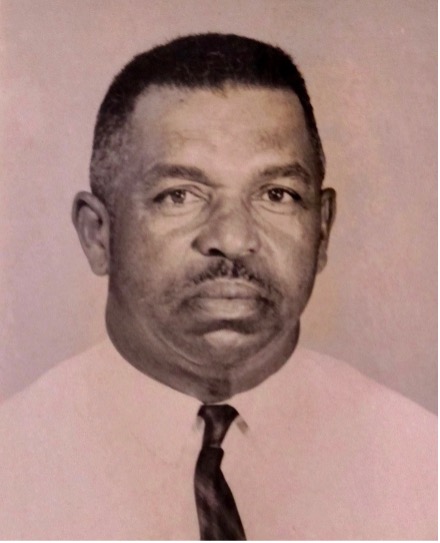
The witness stated: –
“On Saturday 1st November, 1969 I was at home alone. About 11.05 a.m. I was leaving my bedroom to go out of the kitchen door as I was going out. On my way towards the kitchen door I heard a clicking sound coming from the kitchen door. The door was closed but not locked. When I got to the door I pulled the curtain across and on looking out I saw a man known to me as Robinson. This man had his left hand on the silver knob of the door. I could not see his right hand. He was wearing a turquoise-coloured shirt, dark pants, bare-headed. He was also wearing a black glove on his left hand. When I pulled the curtain across from the door this man ran. I did not follow him. I moved towards the kitchen sink and looked out of the window so that I would be able to get a better look at this man. This man did not get inside of my house. I would be able to recognize this man again if seen by me. This man is very dark and his age would be about 27-28 years of age. I am not sure of the name of this man Robinson. When I find out his name I will inform the Police and I would like for him to be warned to stay away from my home.”
The same witness later told D.C. Cann that the man’s name was Rupert Robinson whose true identity was soon established as Kenneth Rupert Alexander Robinson a.k.a. ‘Nanabread’.
This information was important because police were investigating a continuing series of housebreakings in Warwick. Robinson's methods were already familiar. He forced shutters or window sashes, lifted screens, unscrewed light bulbs or disconnected electricity before entering, and sometimes covered his hands with gloves, socks or cloth. He operated both by day and by night and usually travelled in borrowed vehicles.
In the weeks before Christmas, housebreakings were reported almost daily in Warwick and Paget. Patrols were increased, and in January 1970 police obtained a warrant to search Robinson's home. Nothing of evidential value was found.
Mrs. J. told me that from her bathroom window she had seen Robinson standing near the property and looking around suspiciously before disappearing into the backyard. About ten minutes later she saw him walking east along the old railway track, carrying a brown paper bag. She heard what sounded like coins or chains rattling as he passed her house. Her suspicions had prompted her to telephone the occupants and leave a message for Mr. D. through his taxi service.
Mrs. J. knew Robinson by sight and was confident of her identification. She also gave me a clear description of his clothing and distinctive walk. I believed I had an active lead and began searching for him immediately.
As he turned away from the bank, I approached him and said that I wanted to speak to him about a housebreaking. He immediately changed direction and hurried towards the main road. Constable Clyde 'Tango' Burgess arrived in his patrol car and stopped directly in front of him.
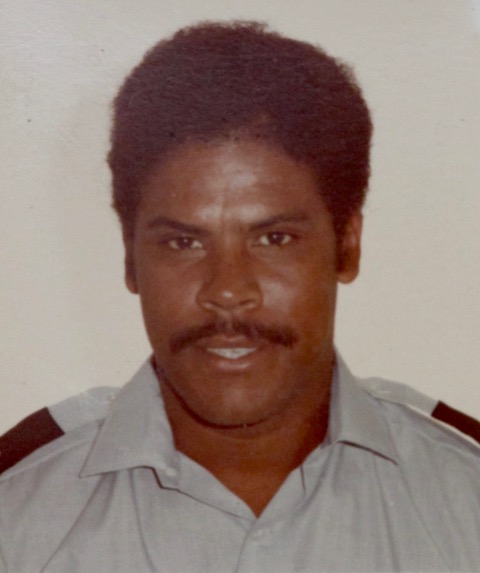
Believing I had sufficient reasonable grounds to do so, I arrested Robinson on suspicion of breaking, entering and theft. He nodded towards Burgess and said, 'I'll go with him, but I'm not going with you.' He then climbed into the front passenger seat of the patrol car. Burgess drove him to the Western CID office at Prospect, and I followed in my car.
At the office, Robinson refused to empty his pockets or allow me to search him. He became increasingly aggressive, and it was clear that forcing the issue would lead to a physical struggle. He asked to speak to Detective Inspector Clive Donald, whom he knew through football. I later took Robinson, uncuffed, to Hamilton Police Station, where he again refused to be searched until D.I. Donald arrived.
Mrs. D. confirmed that she kept a quantity of brown envelopes used for rolls of quarters and that the Florida key ring belonged to her husband. It had been given to him by his mother in Florida.
Station Sergeant Anthony 'Sonny' Roberts later obtained Robinson's clothing from him in the cells.
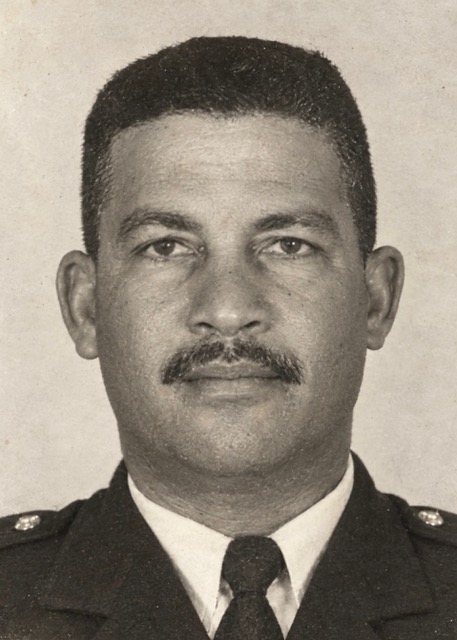
Robinson resisted giving up his socks, saying the floor was cold, and eventually threw them into the toilet. Sgt. Roberts retrieved them and handed them over in a paper bag. They were soaking wet and smelled strongly of urine, so I did not examine them closely. I sent the socks and the rest of the clothing to Detective Constable Ronald Wallace at the Forensic Science Laboratory.
Robinson said that he had learned years earlier never to give a written statement to police. He admitted visiting the mobile bank, claiming that his money came from cashing a cheque given to him by his mother.
At times he was boastful and provocative. When asked about other offences, he said he had committed a previous housebreaking but had 'got away with it'. He challenged police to prove the present case and insisted that the items found in the patrol car had not been found on him.
'I'll steal tomorrow or when I get out of here, and forever. I'll always steal. I'm too smart, but you won't catch me again.'
‘You Georgie, you’re the big man. I am as well but you’ve got to prove what you’re saying. Nobody saw me man. You’re trying to trick me.’
‘I’ve studied law. I’ve had a high school education. Those things weren’t found ON me. You can’t prove nothing.’
‘I’ve taken two trips off stealing. I’ve been to New York. I’ll steal tomorrow or when I get out of here and forever. I’ll always steal. I’m too smart but you won’t catch me again.’
Robinson declined to sign the interview record and went to the exit door. His words, however, had revealed both his confidence and his contempt for the investigation.
On 6 May, D.C. Wallace handed me a lady's small Omega wristwatch. It had fallen from one of Robinson's wet socks during examination at the laboratory.
Mrs. D. identified the watch as hers, pointing to several alterations she had made, including replacing the original black suede strap with a silver expanding bracelet. She also produced the original Omega booklet.
The discovery greatly strengthened the case. When I visited Robinson at Casemates Prison with Detective Sergeant Sinclair Bean and Detective Constable Aaron Scott, intending to tell him that the watch had been identified by the owner, he saw me enter the interview room and said, 'I don't want to speak to him.' He turned around and left with the prison officer. The theft of the watch was added to the indictment.
Mrs. J. described seeing Robinson near the house and later walking away along the railway track carrying a brown paper bag. Mr. D. described the broken kitchen window, the ransacked bedroom and the missing quarters.
Constable Burgess told the court that he had found the coin envelopes and key ring beneath the seat occupied by Robinson in the patrol car.
Sergeant Roberts described Robinson's refusal to surrender his socks and his decision to throw them into the toilet.
DC Wallace explained that the Omega watch fell from one of the wet socks at the laboratory.
DI Donald testified that Robinson had been hostile about being searched but eventually handed over more than $130 in mixed United States and Bermuda currency.
During my evidence, defence counsel Mrs. Lois Browne-Evans asked whether the watch still smelled of urine. In front of the judge and jury, I sniffed it and replied that it did not. A watchmaker later testified that any smell would probably have disappeared as the watch dried. I also denied the suggestion that I was hostile towards Robinson or that I had “fingled” the evidence.
Mr Justice Barcilon pointed out the obvious weakness in that explanation saying: “With the socks in the toilet bowl, what would you have to walk in? Would you have been any better off? Robinson replied, “No I wouldn’t.”
Under cross-examination, he denied being near the house and said he did not remember boasting that he would continue stealing. He could offer no convincing explanation for the property found in the patrol car or for Mrs. D's watch being discovered inside his sock.
The case was a striking example of how an alert neighbor, quick and careful police work and several apparently small pieces of evidence combined to secure a conviction. The brown coin envelopes and key ring connected Robinson with the stolen property, while the Omega watch hidden in his wet sock provided the most compelling evidence of all.
Robinson's criminal career was far from over. In later years he would return repeatedly to the courts for burglary, violence and attacks on women, eventually receiving a 14-year term of preventive detention. Those later cases form another chapter in the long and disturbing story of 'Nanabread' Robinson.
Written and compiled by George F. Rose