Written and compiled by retired
Detective Superintendent George F. Rose
George Herbert ROBINS,
MBE, CBE, KPM, OStJ, CPM
Introduction to 1964
This is the fourth in a series of articles by retired Detective Superintendent George Rose about the years in which the Bermuda Police was led by Commissioner George Herbert “Robbie” Robins. This instalment covers 1964, a year of demanding investigations, continuing recruitment problems, new equipment, hurricane planning and several notable acts of police service. Much of the material has been drawn from contemporary newspaper reports and Police Magazines. Some photographs were copied from newspapers and inevitably reflect the reproduction quality of the period.
A busy year begins
Commissioner Robins began 1964 with a public review of police work. Speaking to the Hamilton Rotary Club on New Year’s Eve, he thanked the press and public for their cooperation during the previous year and addressed several matters then attracting public attention.
A five-man team was investigating incidents involving explosives, while the inquiry into an attempted armed robbery at Buckey’s Restaurant had led about 200 rifle owners to bring their weapons forward for examination. Commissioner Robins acknowledged that house-to-house inquiries could be irritating, but said the public had responded with patience and little complaint.
He also announced the arrival of a new radar set operating on a different wavelength. The device was expected to defeat the radar warning equipment then being used by some motorists. Robins used the occasion to discuss the sometimes difficult relationship between the police and the public, particularly over auxiliary-cycle offences involving young riders. In his view, many of those boys were mechanically gifted and would benefit from properly controlled competition rather than dangerous racing on public roads.
Robins also rejected suggestions that Central Division should move entirely from Hamilton to Prospect. Hamilton Police Station, he pointed out, received thousands of visits from members of the public and housed the Criminal Investigation Department, parish constables and prosecutors. Its central location remained essential.
First aid, ceremony and police sport
January brought a visit by Rear Admiral Royer Dick, Chief Commissioner of the St. John Ambulance Brigade. At a parade at Prospect he presented first-aid certificates to nearly 50 officers and congratulated the Bermuda Police for the interest its members had shown in the Brigade’s work. He encouraged them to use their influence with young people and to promote the value of first-aid training and public service.
The same month saw the ceremonial opening of the Hilary Sessions of the Supreme Court, with police officers in full dress uniform and Commissioner Robins seated behind the Chief Justice. Such occasions reflected the formal traditions still surrounding Bermuda’s courts and police service in the early 1960s.
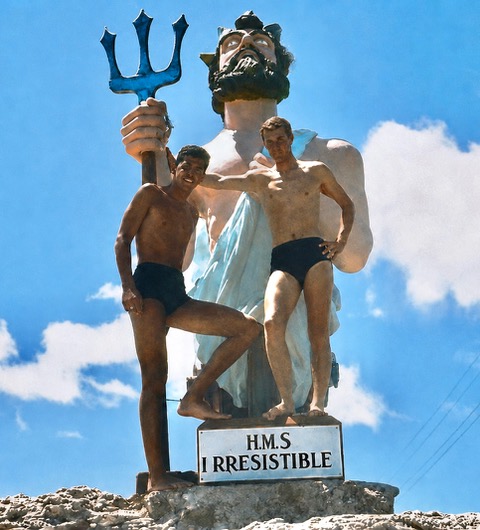
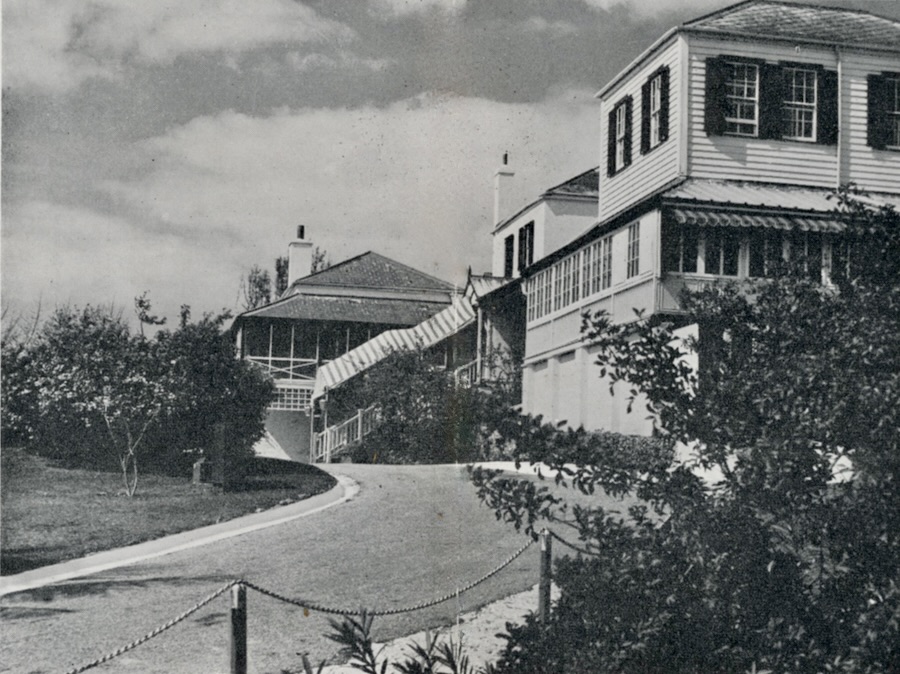
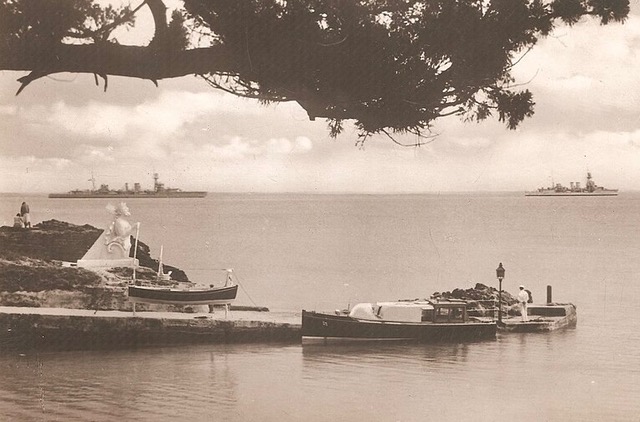
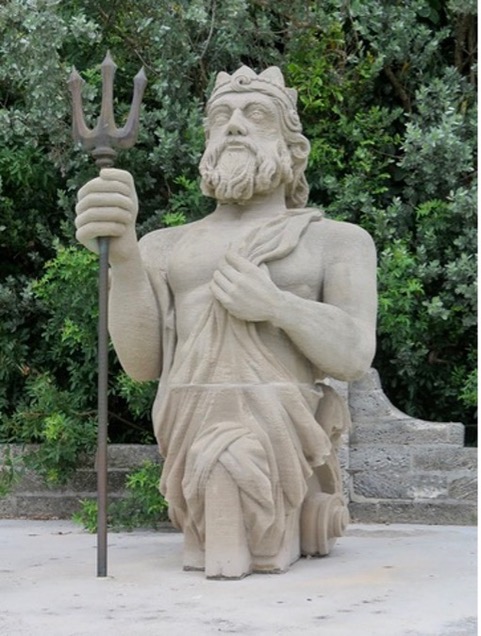
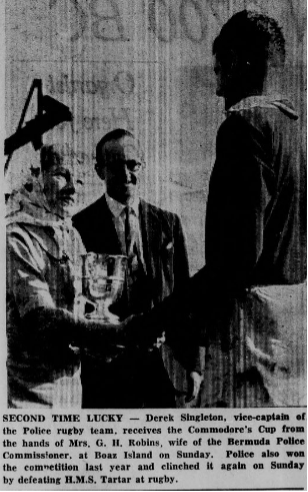
Police sporting success also continued. For the second successive season our Police teams won the Commodore’s Cup, one of Bermuda’s oldest sporting trophies. Originally presented in 1923 for competition between naval and military units, the Cup later became a contest involving Royal Navy ships and the Bermuda Police. Events included rugby, football, hockey, tennis, squash, golf and shooting. The competition had to be completed in only three days because Royal Navy vessels were seldom in Bermuda together for long.
Police receive the Commodore’s Cup
after retaining the trophy in 1964.
The Tucker’s Town investigation
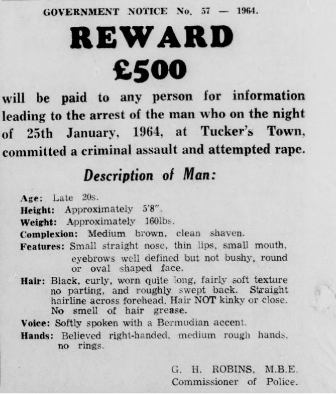
The most serious investigation of the year followed a violent assault and attempted rape at Tucker’s Town on 25 January. The Government offered a £500 reward for information leading to the arrest of the attacker. The case caused widespread concern and again raised questions about the ability of a force containing a large proportion of overseas officers to obtain local information quickly.
During the course of this investigation the Royal Gazette had argued that the shortage of Bermudian officers was a fundamental weakness. A senior police official agreed, saying that local recruitment was closely tied to pay and conditions of service. Bermudians had expressed interest in police work, but many considered the salary unattractive.
The £500 reward notice issued in
connection with the Tucker’s Town attack.
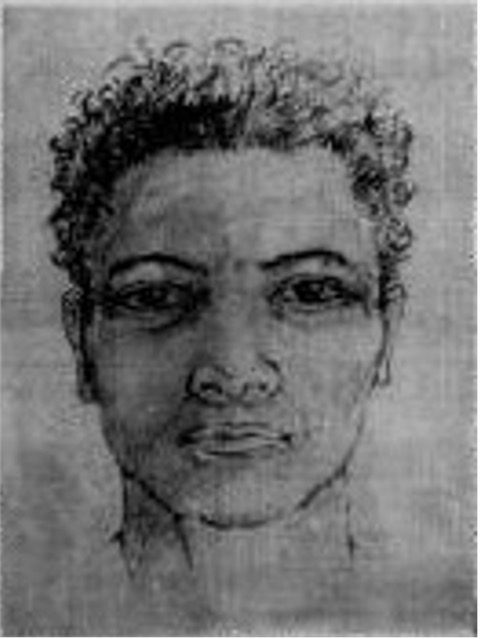
HAVE YOU SEEN A MAN WHO LOOKS LIKE THIS?
If you have call 2-2222
During this investigation the police released an an artist’s impression of the assailant which had been drawn by a member of the police force based on information supplied by the victim. The police also set up a temporary substation in the Tucker’s Town area as a base of operations being conducted by teams of detectives in their search for the assailant.
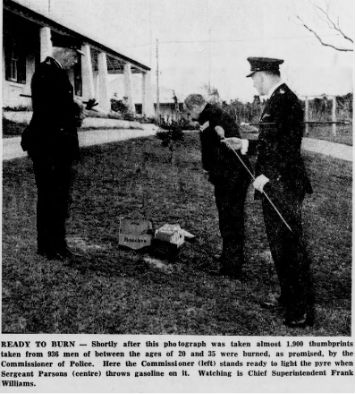
In an effort to identify the attacker, the police launched what became known as “Operation Tom Thumb”. Bermudian men between the ages of 20 and 35 were asked to volunteer their thumbprints for comparison with a print recovered during the inquiry. The request was voluntary and the Commissioner promised that prints belonging to eliminated persons would be destroyed.
About 800 men came forward. Scotland Yard detectives Superintendent Halliday and Detective Sergeant Peeling also travelled to Bermuda to assist. Former officer Alfie Fox later recalled that Commissioner Robins arranged for serving police officers to provide elimination prints as well.
CLICK HERE to read more about Operation Tom Thumb and the use of Scotland Yard in this case.
By the end of February police announced that they believed they knew the identity of the person responsible. On 2 March, keeping his public promise, Robins set fire to the collected thumbprint forms outside Police Headquarters in the presence of the press, radio representatives and Chief Superintendent Frank Williams. A St. David’s man was subsequently charged in connection with the attack.
Commissioner Robins prepares to burn
the volunteered thumbprint forms at Prospect.
A constable before the Supreme Court
During February Commissioner Robins was called as a defence witness in the Supreme Court trial of 21-year-old Police Constable Roger David Taplin. Taplin changed his plea to guilty on two forgery charges involving cheques for £96 and £115.
Robins told the court that Taplin had broken down and apologised for the discredit brought upon the Force, himself and his family. He had previously served with the Berkshire Constabulary and had not been in trouble during his short period in Bermuda. Defence counsel asked the court to take account of his youth, previous good character and remorse. The episode was an uncomfortable one for the Force and demonstrated Robins’ responsibility not only for public policing but also for discipline and welfare within his own ranks.
Recruitment and training
Recruitment remained one of the central concerns of 1964. In May five trained constables from the UK were appointed: Richard Johnson, Andrew Bermingham, John Charlwood, Francis Thompson and Roger Sherratt. , followed by Terence Heathcote in June.
Also in June the Police announced a campaign to visit about a dozen schools and encourage older pupils to consider police careers. A team led by Chief Inspector Roy Chandler planned to show a training film, display photographs of different branches of police work and explain technical roles such as radio servicing and laboratory work.
The campaign followed disappointing local recruitment figures. A proposed three-week “Three R’s” course, intended to help applicants pass the entrance examination, had to be cancelled because no one applied. The school visits were therefore intended to plant the idea of a police career in pupils who were still too young to join immediately.
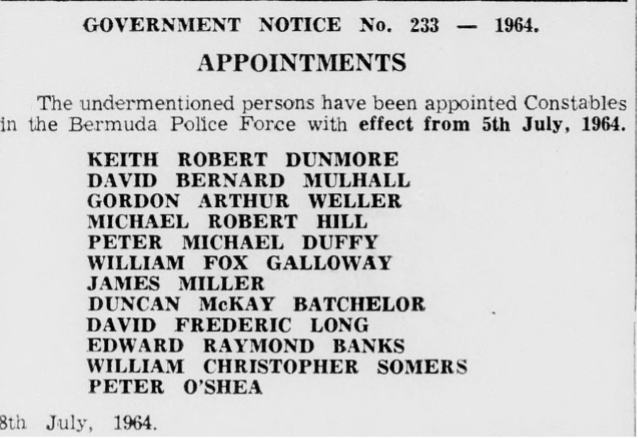
A further twelve constables from the UK were appointed from 5 July: Keith Dunmore, David Mulhall, Gordon Weller, Michael Hill, Peter Duffy, William Galloway, James Miller, Duncan Batchelor, David Long, Edward “Ray” Banks, William Somers and Peter O’Shea. They were joined on Basic Training Course # 5 by two local recruits, Delwyn “Dell” Trott, and Wayne Perinchief who went on to rise through the ranks to Assistant Commissioner.
The July 1964 notice appointing twelve new police constables.
Recruitment continued during the year which included Bermudian, Leroy Jones in September, and a group of experienced constables from the UK - Allan Childs, Norman MacLean, Thomas Christie, Adrian Brindle, Richard Murphy, Patrick Murphy, David Thackeray, Michael Heelan, Michael Caulkett, Geoffrey Wilson, Graham Swinyard, and William Wright.
One of the new recruits, Patrick Murphy, had previously served as an Assistant Inspector in the Northern Rhodesia Police, and his father, Mr. J.P. Murphy had been appointed as the Divisional Officer of the Hamilton Fire Brigade 18 months earlier.
Equipment, visitors and changing police methods
Modernisation was a recurring theme. In April a new police radar set was demonstrated on Middle Road near the Arboretum, with police vehicles driven past the equipment while Commissioner Robins and senior officers observed its operation.
Robins also maintained close contact with senior British police officers. Ranulph Bacon, head of the Criminal Investigation Department at Scotland Yard, passed through Bermuda in May and was met by Robins, an old colleague from their service in Ceylon. Their friendship dated from the 1940s and provided Bermuda with useful access to Scotland Yard advice and specialist assistance.
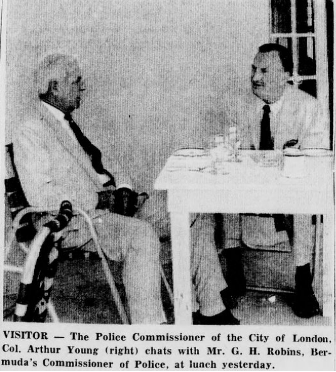
Later in the year Colonel Arthur Young, Commissioner of the City of London Police, stayed with Robins while travelling to an Interpol conference. Young praised the calibre of younger Bermuda officers and discussed the worldwide problems of recruitment, conditions of service, rising crime and modern crime-prevention methods.
Colonel Arthur Young, Commissioner of the
City of London Police, with Commissioner Robins.
Young was particularly interested in two developments: regional crime squads and small personal two-way radios for officers on foot patrol. The latter were described as a modern replacement for the policeman’s whistle. Robins would later arrange to test similar sets in Bermuda.
Hurricane planning and police welfare
As the hurricane season approached, Robins chaired a meeting of the Emergency Measures Organization (EMO) at the police command post at Prospect. Representatives from the fire service, hospital, health and public works departments, the Royal Navy, Kindley Air Force Base, Bermuda’s local forces, utility companies, the Reserve Constabulary and other essential services reviewed communications and hurricane procedures.
The system received its first major practical test during Hurricane Ethel in September. After a 30-hour vigil, Robins described the operation as successful, although a review was held to resolve minor difficulties. One issue concerned the times shown on hurricane reports, which could make information appear older than it was. Robins suggested using the time of issue from Kindley rather than the earlier Miami reporting time.
September also brought public reports of dissatisfaction among officers, particularly contract policemen from Britain. Complaints concerned pay, accommodation, messing arrangements and conditions of service. Robins initially objected that details had reached the press before being formally presented to him. More than 100 officers of all ranks later attended a meeting at the Police Recreation Club, where he explained revised salaries and back pay and answered questions about housing and living conditions. Some matters had to be referred to Government.
The dispute occurred against a background of resignations and continuing difficulty in maintaining the Force at its authorised strength. It showed that recruitment could not be separated from accommodation, pay and the everyday conditions experienced by officers and their families.
The police launches and a dramatic rescue
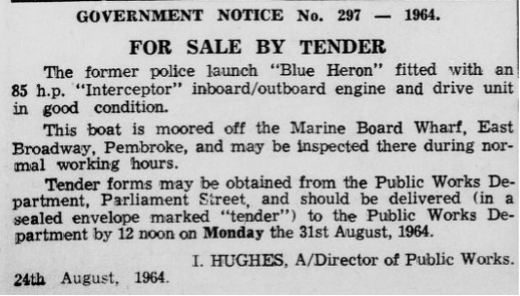
The Police Department’s first launch, Blue Heron, was placed up for sale in August after only about 18 months of service. Built in their spare time by Constables Garland and Jenkinson, the boat had performed useful work but was said to be suffering from “timber fatigue” and was not considered strong enough for the demands placed upon it.
Tender notice for sale of "Blue Heron"
Only days later, the value of the Marine Section was dramatically demonstrated in Hamilton Harbour. A visiting sailor in a small Sunfish became becalmed directly in the path of the departing liner Queen of Bermuda. Despite repeated warning blasts from the liner, the sailor could not move clear.
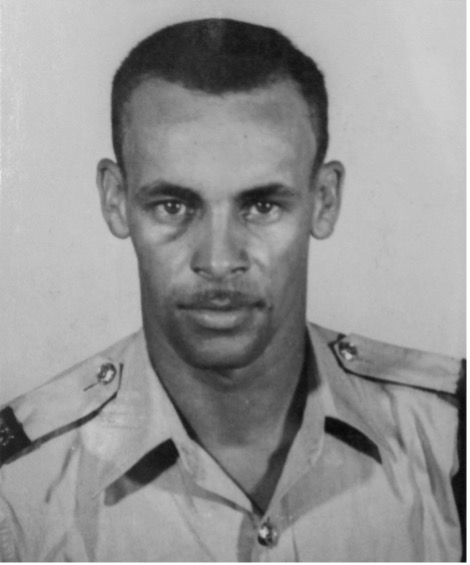
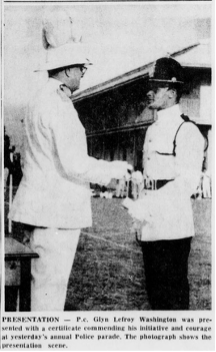
Police Constable Glyn Lefroy Washington, coxswain of the police launch Lady Ermina, drove across the liner’s bows, reached the Sunfish and pulled the sailor aboard. The small boat capsized in the liner’s wake moments later. Commissioner Robins praised Washington’s quick thinking and said he had acted at great danger to himself.
P.C. Glyn Washington
At the annual police inspection in October, Governor Lord Martonmere presented Washington with a certificate commending his initiative and courage. The citation stated that his prompt action had undoubtedly prevented a possible fatality and had brought credit to the Force.
The Governor presents P.C. Glyn Lefroy Washington
with his commendation certificate.
The 1964 Annual Inspection and Training Course No. 5
The annual inspection at Prospect was one of the major ceremonial events of the police year. About 100 officers stood on parade, together with members of the Reserve Constabulary, recruits, dog handlers and police vehicle sections. The Governor inspected the ranks while the Bermuda Militia Artillery band played “Greensleeves”.
During the ceremony Police Constable David Bernard Mulhall received the Baton of Honour as the best recruit on Basic Training Course No. 5. The course included many of the twelve constables appointed in July and marked another stage in Robins’ effort to build a properly trained and professional Force.
Basic Training Course No. 5, July to October 1964.
Top Row (l-r) David Mulhall, Gordon Weller, Peter Duffy, James Miller,
Keith Dunmore, Peter O'Shea, William "Willy" Galloway
Middle Row - Christopher "Walter" Somers, David Long, Delwyn "Dell" Trott,
Wayne Perinchief, Edward "Ray" Banks
Seated - PC John Rawson (Instructor) Sgt Ted Burton, Chief Insp. Roy Chandler,
P.C. Andrew Heggie (Instructor), and Duncan Batchelor
Police motorcyclists and vehicles lined up for the 1964 annual inspection.
Police business in Britain
Robins left Bermuda on 1 October for leave in Britain, but the journey also included a substantial amount of police business. He met the Crown Agents to discuss recruiting, inspected police vehicles and examined new personal radio equipment. He returned in December after helping to select twelve recruits from nearly 30 applicants. Two Bermudians were also due to join them, bringing the next basic training course to fourteen members.
At that point the Force stood at 251 officers, fourteen below its authorised establishment. The new recruits would spend three months on theoretical training followed by three months of practical instruction. This was the sixth basic training course begun during Robins’ commissionership.
In London, Robins tested the Campbell Bruce personal radio used by the City of London Police. Even among tall buildings, narrow alleys and heavy electrical interference, he found reception excellent. Colonel Young agreed to lend two sets for trials in Bermuda after they had been adapted to local police frequencies. Robins also hoped to compare them with equipment being developed by the Lancashire Constabulary.
He discussed regional crime squads and modern investigative methods with Ranulph Bacon at Scotland Yard and arranged for Detective Sergeant John Logan to spend a month attached to the Yard before attending an advanced fingerprint course. At the Police College at Bramshill he visited Sergeant J. M. Cafferkey, who was attending a six-month course, and met senior officers to exchange views on police administration.
Robins also visited Staffordshire Police, where Constable Keith Allchin was training with a police dog. The young Alsatian had performed well and was to return to Bermuda as a gift from Staffordshire, bringing the number of police dogs in the Force to four.
These visits reflected one of Robins’ main priorities: ensuring that Bermuda kept pace with developments in Britain in training, communications, crime prevention and detection. His long professional friendships gave the Force access to expertise and opportunities that would otherwise have been difficult to obtain.
The year in perspective
By the end of 1964 the Bermuda Police had faced a demanding year. The Tucker’s Town investigation tested both detective resources and public confidence. Recruitment remained difficult, and grievances over pay and accommodation showed the pressure under which many officers were working. At the same time, the Force expanded its training programme, explored modern radar and radio equipment, strengthened hurricane planning and maintained close professional links with leading British police services.
The year also produced examples of service that went beyond routine duty, most notably P.C. Washington’s rescue in Hamilton Harbour. Taken together, the events of 1964 show Commissioner Robins directing a Force that was still rooted in ceremony and tradition, but was steadily becoming more organised, technically equipped and professionally trained.
In December a member of the Legislative Council praised the Police Department’s new crime-prevention campaign and urged the public to support it. That appeal echoed a theme running through Robins’ New Year address twelve months earlier: effective policing depended not only on the officers of the Force, but also on the cooperation and confidence of the community they served.
Written and compiled by George F. Rose
Published - Setptember 2026
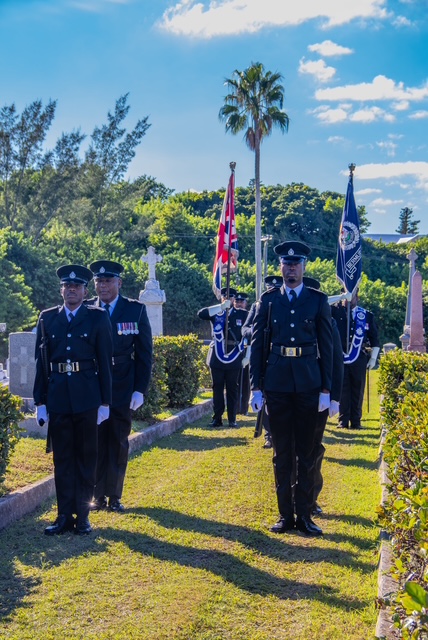
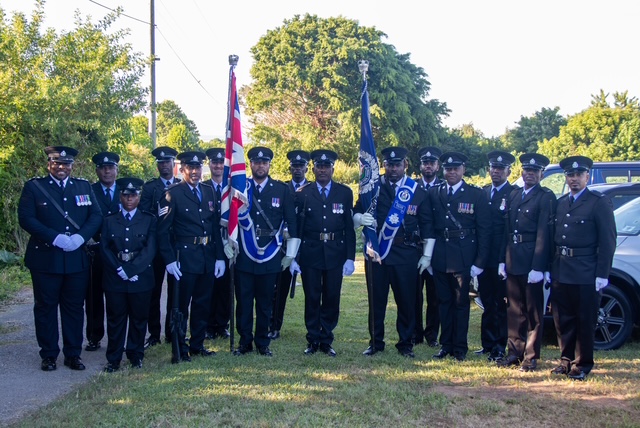 Colour Party and Honour Guard assemble outside the Police Cemetery, Prospect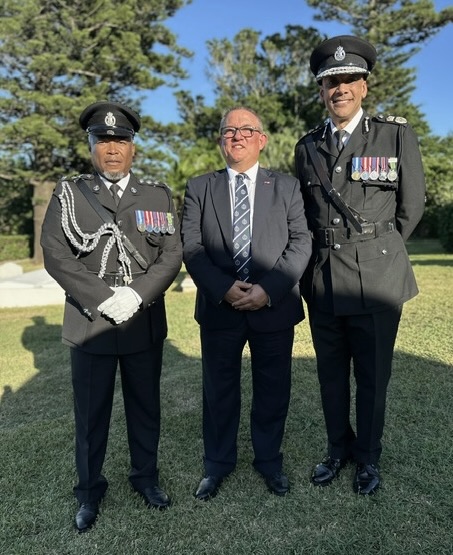
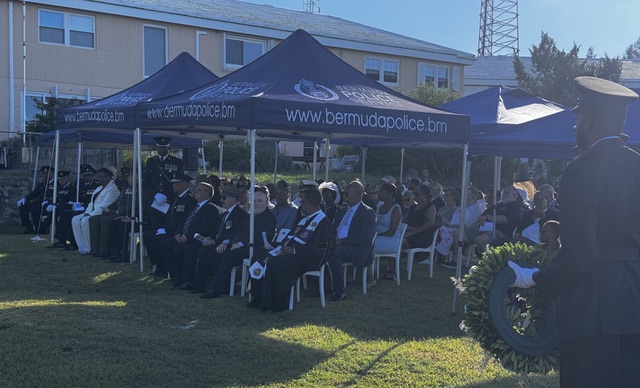
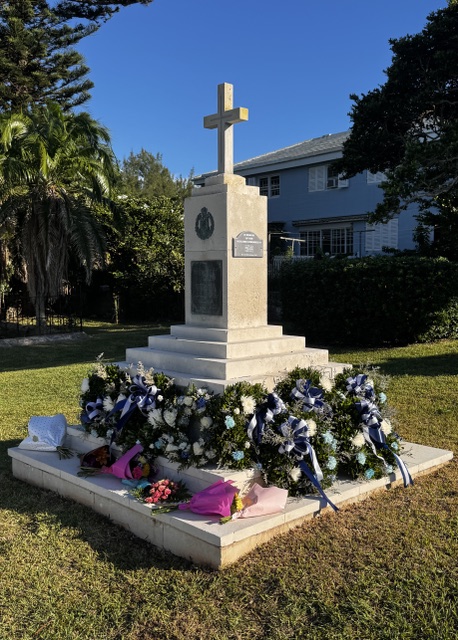 Memorial laden with wreaths and flowers
 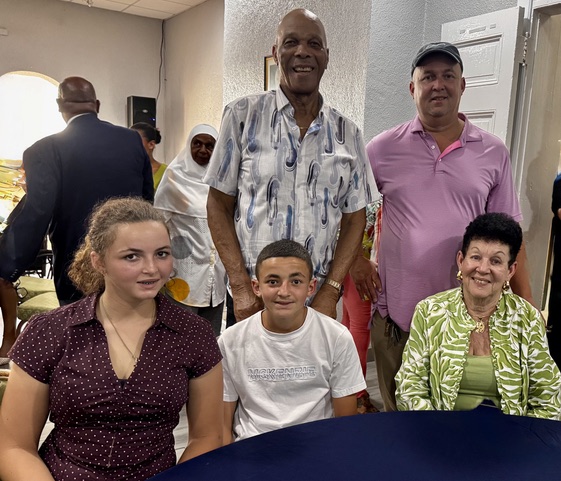 Trott Family Members - Three Generations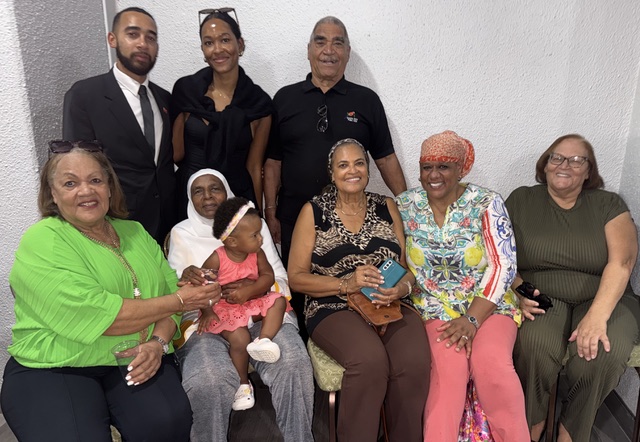
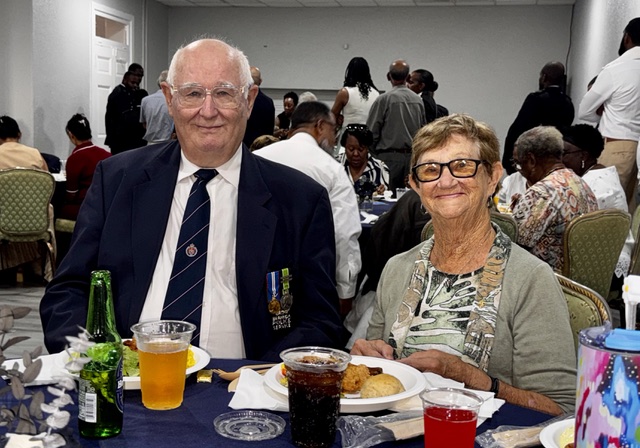
 Young P.C. Roger Sherratt - 1964