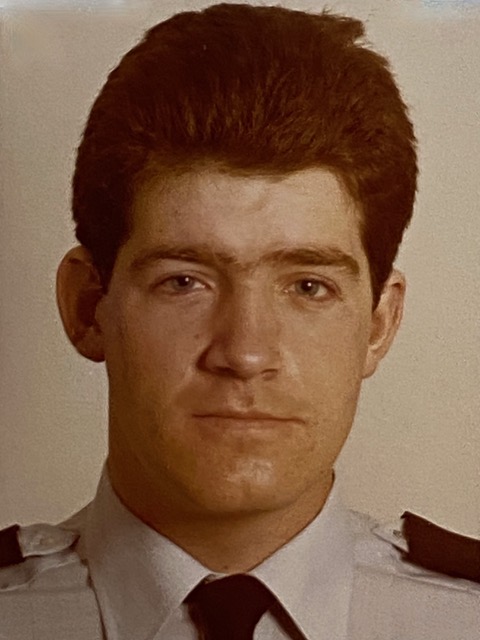
Det/Inspector George Rose
Background and Context
In the early 1980s Bermuda experienced a noticeable rise in crime, placing increasing pressure on police resources. Detectives were frequently required to work extended hours, often on rest days, and the cumulative impact on officers’ health and personal lives was becoming a growing concern within the Service.
Police Commissioner Frederick Bean publicly acknowledged these pressures in 1983, noting that the strain of policing in a changing and more complex society was affecting officers both physically and mentally.
In his 1982 Annual Report Commissioner Bean had written, “The only solution was to bolster the 421-officer force with more policemen, said the Commissioner. "We are genuinely sincere in trying to perform our responsibilities to the best of our ability,” said Mr. Bean, "however, the result of such constant stress is well documented on the lives of policemen resulting as it does in deterioration physically and mentally to one's health and the disruption of social life which leads to divorces and broken homes.”
It was within this climate that the events of June 1984 unfolded.
The Crime
On the evening of Friday, June 29, 1984, well-known businessman Dudley Alexander “Buddy” Thomas was brutally assaulted at a cottage he owned on Lighthouse Road in Southampton.
Mr. Thomas, the owner of the Elbow Beach Cycle Livery, suffered severe head injuries during the attack and was later found unconscious. He was transported to King Edward VII Memorial Hospital where doctors initially described his condition as critical and close to death.
It appeared that the attacker had also attempted to rob him, targeting his wallet during the assault.
Initial Police Response
On the morning of Saturday, June 30, 1984, CID officers were recalled to duty to begin an urgent investigation. The severity of Mr. Thomas’s injuries meant that the enquiry was treated as a potential murder investigation from the outset.
Officers attended the scene at the cottage, which appeared sparsely furnished and largely unoccupied. The primary crime scene was located in a small bedroom, indicating a contained but violent struggle.
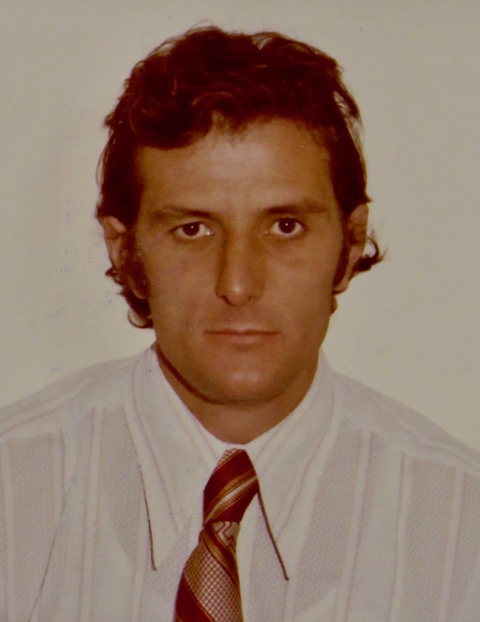
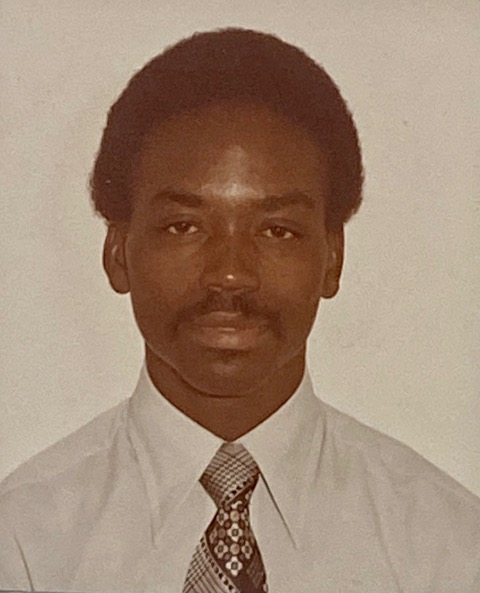
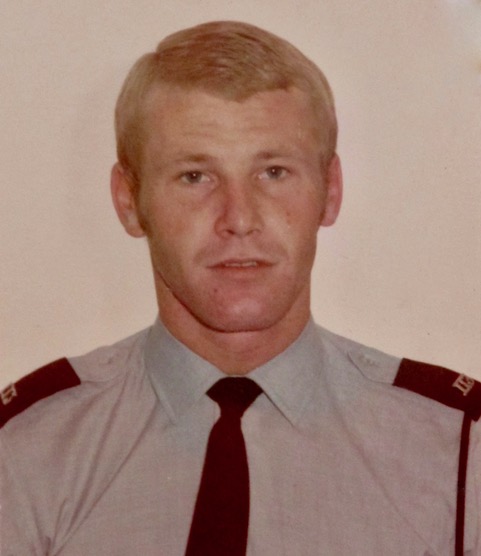
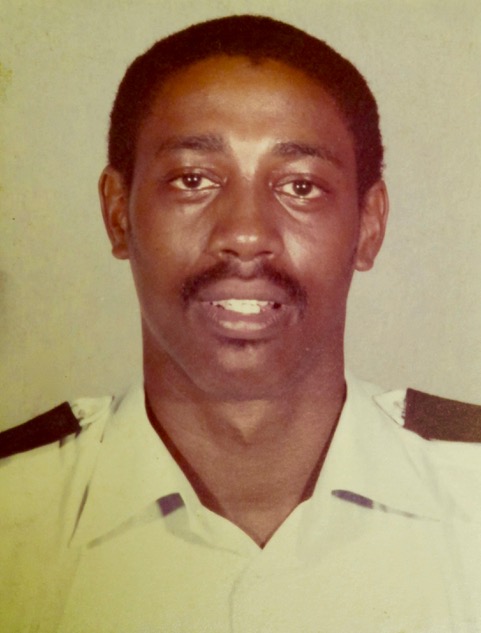
D/Sgt Wilhelm Bourne
DC Alan Cleave
 DC Stephen Lightbourne
DC Ralph Furbert
D.C. Nick Jamieson
An investigative team led by D/Insp George Rose, included D/Sgt Wilhelm Bourne, D.C’s Alan Cleave, Stephen Lightbourne and Ralph Furbert, together with Scenes of Crime Officers, D/Sgt Keith Cassidy and DC Roddie Barclay. Neighbourhood enquiries were conducted by DC Nick Jamieson and DC Alan Cleave liaised with the victims family at the hospital together with the attending doctors.
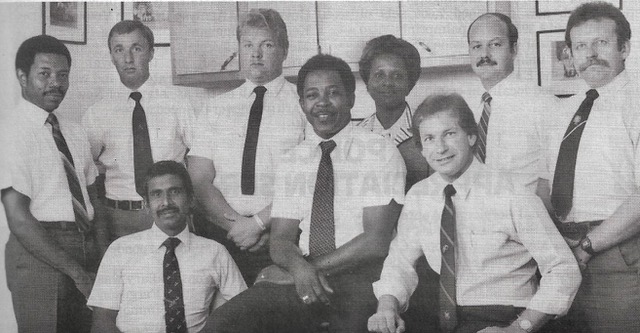
Scenes of Crime staff perform a vital role in crime investigations
Standing (l-r) DC Theo Providence, D/Sgt Keith Cassidy, DC Graham Alderson,
WDC Aideen Fletcher, DC Howard Cutts, DC Roddy Barclay
Seated - DC Ashmead Ali, D/Insp Calvin Christopher and Sgt. Ernie McCreight
Photo by Ernie McCreight
Early Investigations
Police quickly began gathering evidence and establishing a timeline of Mr. Thomas’s movements on the day of the attack. A public appeal for information was issued, asking anyone who had seen him between midday and the evening to come forward.
Crime scene officers conducted a detailed forensic examination, which led to a critical breakthrough later that day.
Key Breakthrough
Fingerprint evidence recovered from inside the cottage by D/Sgt Cassidy, identified Dean Anthony O’Brien as a suspect. O’Brien was known to police and had recently been released from prison. He also had a prior connection to Mr. Thomas, having previously worked for him.
This discovery shifted the investigation significantly, and officers began actively searching for O’Brien across the island.
Search for the Suspect
CID officers carried out coordinated searches in Hamilton, Warwick, and surrounding areas. Information gathered suggested that O’Brien had no fixed address and did not regularly remain in one location.
A possible sighting was reported in Warwick, but despite extensive searches of nearby areas, including Jones Village and surrounding railway tracks, he was not immediately located.
Officers concluded duty late that evening after an intensive and extended operation lasting some 14 hours.
Developments on July 2, 1984
On Monday, July 2, reports confirmed that Mr. Thomas had stabilised in hospital, though he remained seriously injured.
Later that morning, O’Brien unexpectedly attended Hamilton Police Station voluntarily and asked to speak with officers.
Interview and Arrest
During initial questioning, O’Brien denied involvement in the attack and displayed a defiant attitude. However, officers noted signs of nervousness and agitation.
He provided an account of his movements on the day in question, claiming to have spent time with acquaintances and later attended a social gathering.
Q. “So who told you we wanted to see you?”
A. “Everybody knows. Williams told me. He told me it was to do with the attack on the old guy.”
Q. “Which Williams is that?” O’Brien shook his head and remained silent.
Q. “So where were you on Friday afternoon – tell me what happened?”
A. “I passed through the yard by Stevie and Trenton’s house. Matter of fact they spoke to me. It was before 4.30. I was on my way to Coltrain’s house and we guys watched films – two films.”
Q. “Who else was there?”
A. “Me. Coltrain, Keith somebody. Young guys man.”
Q. “Then what?”
A. “About 6.30 I walked Jones Village. There weren’t nobody there. I saw Gary Jones and his sister and a guy Colin. Nothing was happening. I stayed up there until 11.00 then caught a bus to Pond Hill. I was partying until 3:0 then I went back to the Village to sleep. I don’t know nothing about the old man. I never did nothing to him.”
Q. “I will tell you Dean that sometime Friday evening your old boss “Buddy” Thomas was beaten and robbed inside his house up Lighthouse Road. He’s in the hospital now recovering from his injuries and I have good reason to believe that it was you who assaulted him in his cottage and robbed him of his money.”
A. “You ain’t got reason to believe nothing like that. I ain’t even been to his place since before I left working for him which was last year after Cup Match. What happened was I smashed his truck and got fired because of that.”
Following the interview, O’Brien was arrested on suspicion of attempted murder. His clothing and personal items were seized for forensic examination.
Confession
Later that evening, in company with DS Adams and DC Jamieson I commenced a Q/A interview under caution with O’Brien which was recorded by DC Jamieson. Almost immediately during this interview O’Brien admitted to having pressured open the locked front door into ‘Dolly’s Cottage’ because he was upset with his boss for having fired him for damaging his truck when he was employed at Elbow Beach Cycle Livery which was not his fault.
He admitted having been surprised when Mr. Thomas had arrived and he had hidden in the bedroom closet wherein he had found an old crash helmet which he used to beat his old boss “a few times – more than once”, as he said.
O’Brien admitted that he was looking for money but had found none. He continued to deny he had an accomplice in the attack. He said it was the first time he had ever been inside the house although he had been on the property many times to collect or drop-off his boss before he got fired. He admitted that when Mr. Thomas was unconscious he had tried to steal his wallet. He couldn’t get the wallet out of Mr. Thomas’ pocket so he ripped his trousers off to get to it. Then he ripped the phone out of its socket and left him bleeding in an empty house.
The interview record was read over to him at which time he initialed intentionally-made mistakes before signing the record as correct.
Corroborating the confession
As a follow-up to answers he provided during the interview, I went in company with DS Adams and O’Brien to ‘Dolly’s Cottage’ where, following O’Brien’s directions, DS Adams recovered one pair of men’s trousers seen hanging from a tree branch above the cottage driveway near the bottom of the garden.
This finding further supported the case against him.
Court Proceedings
Seventeen months later in October 1985, O’Brien appeared before the Supreme Court where he pleaded guilty to attempted murder and robbery.The court heard details of the violent assault, including the extent of Mr. Thomas’s injuries and the circumstances of the attack.
Chief Inspector George Rose told the Court that O’Brien was jailed on a cheque forgery charge in early 1984 and had been out of prison for less than a month when he attacked Mr. Thomas.
“At the time of the offence he was unemployed and had no fixed abode. He was known to be hanging out with criminals and known drug users,” said the Police officer.
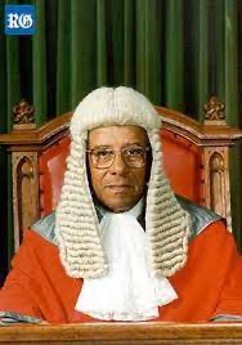 Sir James Rufus Astwood
Chief Justice of Bermuda
O’Brien was sentenced to ten years imprisonment, with Chief Justice Hon. Sir James Astwood emphasizing the severity and brutality of the offence. “The punishment must fit the crime,” he said. “Ten years in prison is the best I can do for you.”
Aftermath
Variously described during the following 40 years of his life as both a prolific and serial criminal, O’Brien at the age of 63, was sentenced to a total of 20 months behind bars on December 22, 2024 after he admitted taking two vehicles, stealing a bag and prowling around two residences when he appeared in Magistrates’ Court.
Mr. Thomas survived the attack but sustained serious and lasting injuries. He passed away in 1988.
The case remains a significant example of the type of violent crime that emerged during that period in Bermuda, as well as the pressures faced by police officers tasked with responding to it. Commissioner Bean issued a statement saying there was no doubt that the Island needed more officers to expand the current Police strength of 419. “We are terribly understrength.” he said.
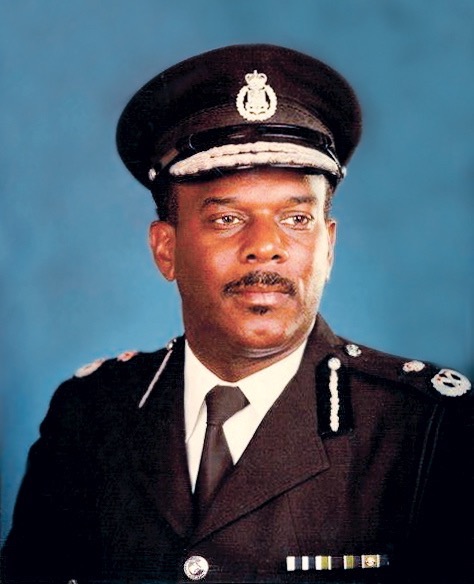 Commissioner Frederick "Penny" Bean
“Police officers were required to provide security at Government House, the Airport, the Premier’s residence and at the courts. This eats into our manpower and by the end of the day we are whittled down to a minimum which means we are unable to maintain the high Police profile which is desirable,” said Commissioner Bean.
This case clearly demonstrates the effectiveness of coordinated investigative work, particularly the role of forensic evidence in identifying and securing a conviction.
Compiled by George F Rose
Published - April 2026